Parliamentary Advisory Board
Sascha van Beek’s Summer Tour Concludes with Visit to University Hospital Bonn
+++ Research, international cooperation and support for the next generation in the fight against neglected tropical diseases +++
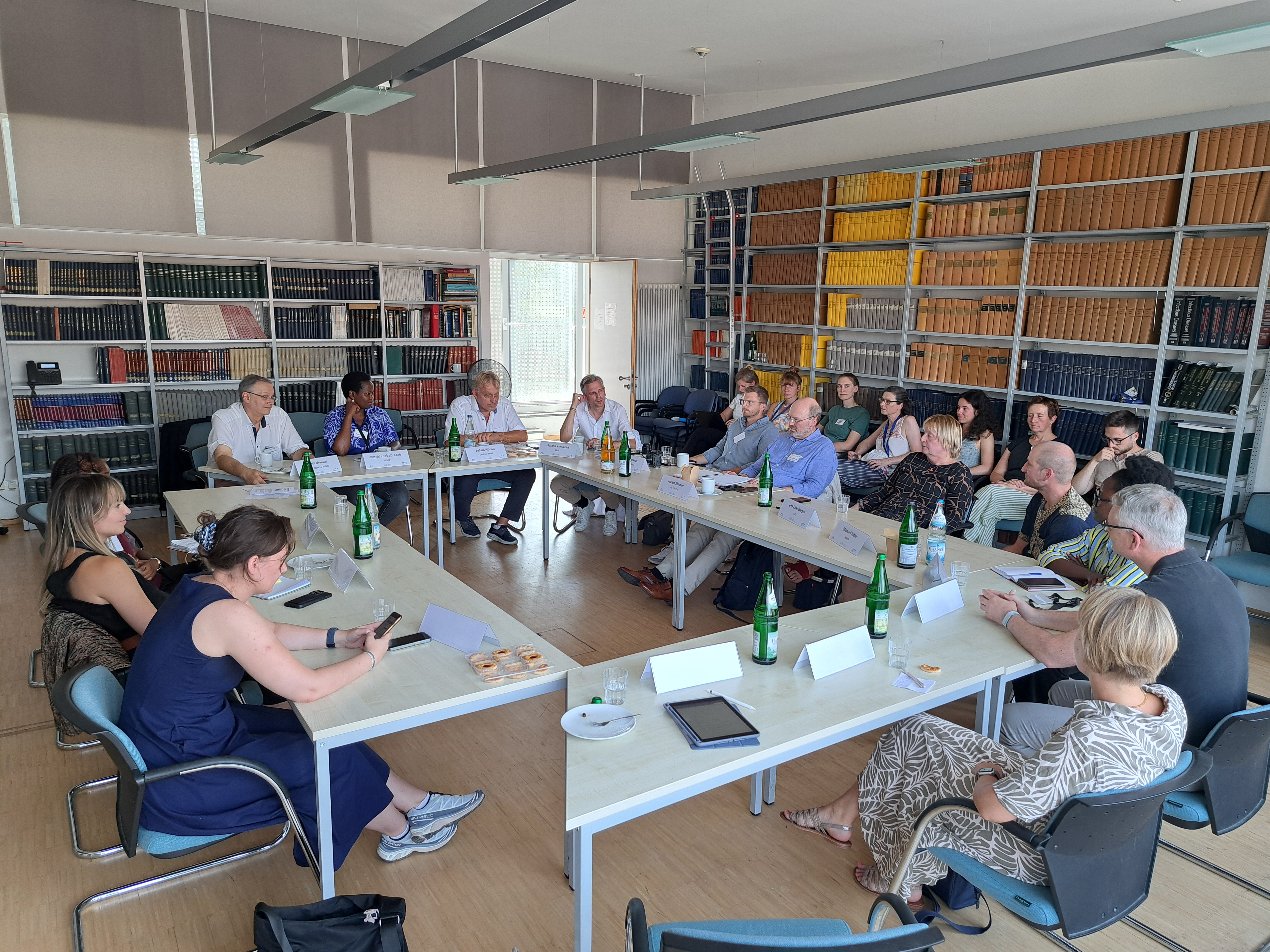
Bonn, August 14, 2026 – To conclude his summer tour, which aimed both to learn more about the various aspects of combating neglected tropical diseases (NTDs) and to raise public awareness of the issue, Sascha van Beek, MP and Chair of the DNTD Parliamentary Advisory Board visited the Institute of Medical Microbiology, Immunology and Parasitology (IMMIP) at University Hospital Bonn. The visit focused on research into filarial diseases, international cooperation, and support for the next generation of scientists.
Under the leadership of Prof. Dr. Achim Hoerauf, spokesperson for the German Network for Neglected Tropical Diseases, IMMIP conducts research into, among other diseases, lymphatic filariasis (elephantiasis) and onchocerciasis (river blindness). During a tour of the laboratories, Sascha van Beek gained insights into diagnostics, research activities, and the analysis of patient samples.
A particular focus was the exchange with young female scientists from Nigeria and Tanzania. Discussions centered on how African researchers can be better supported, international collaborations expanded, and interdisciplinary research strengthened.
“Combating NTDs requires many different stakeholders. Science, international cooperation, policymakers and the private sector need to work closely together. Young scientists in particular are important drivers of innovation and change agents in this effort,” was the conclusion of the discussions.
The conversations also highlighted how closely NTDs are linked to other global health issues – ranging from pandemic prevention and antimicrobial resistance to climate change and the One Health approach. The increasing spread of vectors in Europe is also making international research and the exchange of expertise ever more important.
A key challenge remains funding: for many NTDs, there is no conventional commercial market. Research and development of new medicines and diagnostics therefore depend on public funding, international partnerships and long-term strategies. Reliable research infrastructure in partner countries is equally essential.
Prof. Dr. Achim Hoerauf thanked Sascha van Beek for his visit and the exchange. “We need to work together to ensure that research findings reach the people and places where they are urgently needed. At the same time, we in Europe can benefit from the expertise of our international partners,” Hoerauf said.
The visit to IMMIP marked the conclusion of the summer tour and demonstrated that eliminating neglected tropical diseases requires strong international partnerships, sustainable funding, modern infrastructure and, above all, a well-trained next generation of scientists.
Summer Reception 2026 Highlights Global Responsibility for Health
++ Keynote address by Prof. Dr. Ohene Adjei, Ambassador of the Republic of Ghana to Germany: Partnerships Based on Equality

photocredit: DNTDs
Berlin, 23 June 2026 – This year's Summer Reception of the German Network Against Neglected Tropical Diseases focused on international partnerships, scientific collaboration, and shared global responsibility. At the heart of the evening was the discussion of how sustainable progress in the fight against neglected tropical diseases (NTDs) can be achieved through long-term cooperation between policymakers, researchers, and affected countries. The guest of honour was Prof. Dr. Ohene Adjei, Ambassador of the Republic of Ghana to Germany. A renowned tropical medicine specialist and parasitologist, Prof. Adjei brings decades of experience in research, teaching, and healthcare and has maintained close scientific ties with Germany through numerous collaborative projects.
Health as the Foundation for Stability and Development
The Summer Reception was hosted under the patronage of Member of the German Bundestag Sascha van Beek, Chair of the Parliamentary Advisory Council on Neglected Tropical Diseases. In his welcoming remarks, he emphasized the crucial role of resilient health systems in ensuring social stability and economic development. Health, he noted, is not only essential for improving living conditions locally but also for fostering reliable international partnerships and maintaining resilient global supply chains. Germany, he stressed, bears a particular responsibility in this regard, especially in connection with trade in strategically important raw materials.
Van Beek also highlighted the growing challenges posed by climate change. Disease-carrying vectors such as the Asian tiger mosquito are increasingly spreading across Europe and may contribute to the transmission of tropical diseases in the future. Despite these developments, keeping global health high on the political agenda remains difficult, particularly in light of pressing geopolitical priorities and shrinking public budgets.
Ghana Leading the Fight Against NTDs
In his keynote address, Prof. Adjei presented an impressive overview of Ghana's achievements in combating neglected tropical diseases. In recent years, the West African country has successfully eliminated trachoma, Guinea worm disease, and human African trypanosomiasis (sleeping sickness). Transmission of lymphatic filariasis has been interrupted in 109 of the country's 116 formerly endemic districts, while the elimination of onchocerciasis is also increasingly within reach. Education and training of health professionals, as well as NTD research, continue to be advanced at the Kumasi Centre for Collaborative Research (KCCR).
According to Prof. Adjei, these successes are the result of several key factors: a strong healthcare infrastructure, early diagnosis, and, above all, long-standing international research partnerships. At the same time, poverty and climate change remain the principal drivers of NTD transmission. "Diagnosis is the key. Only when diseases are detected early can they be effectively controlled," he emphasized.
International Partnerships as a Key to Success
Prof. Adjei made it clear that Ghana's progress would not have been possible without international cooperation. No country, he argued, can tackle global health challenges alone. Long-standing collaborations with German universities and research institutions—particularly in Bonn and Hamburg—have played a vital role in building scientific expertise, training health professionals, and establishing sustainable research structures. In the fight against neglected tropical diseases, mutual learning and joint research are indispensable. Partnerships based on equality are therefore not only a political aspiration but also a practical prerequisite for lasting success.
Prof. Adjei himself exemplifies the close scientific cooperation between Ghana and Germany. As former Chief Executive Officer of Komfo Anokye Teaching Hospital in Kumasi and former Deputy Director of the KCCR, he collaborated with research partners from Bonn and Hamburg for nearly two decades. In addition to his work on filarial diseases, he contributed to the development of what has become the standard treatment for Buruli ulcer.
Peace as a Prerequisite for Health
Alongside scientific and health policy issues, Prof. Adjei highlighted another essential factor: political stability. Sustainable health improvements, he noted, cannot be achieved without peace and functioning state institutions. "Peace is the foundation for everything else. Ghana is a blessed country—safe, stable, and governed by leaders who work closely with traditional authorities."
Shaping Global Responsibility Together
The Summer Reception underscored that the fight against neglected tropical diseases extends far beyond medicine. Health, peace, economic stability, climate change, and international cooperation are deeply interconnected. The event reaffirmed that sustainable progress can only be achieved through long-term partnerships and shared global responsibility.
The evening was moderated by Prof. Dr. Achim Hörauf, who collaborated with Prof. Adjei in Hamburg and later in Bonn and today continues to coordinate numerous research and training initiatives between Ghana and Germany.
Reconstitution of the Parliamentary Advisory Board on Neglected Tropical Diseases (PB-NTDs)
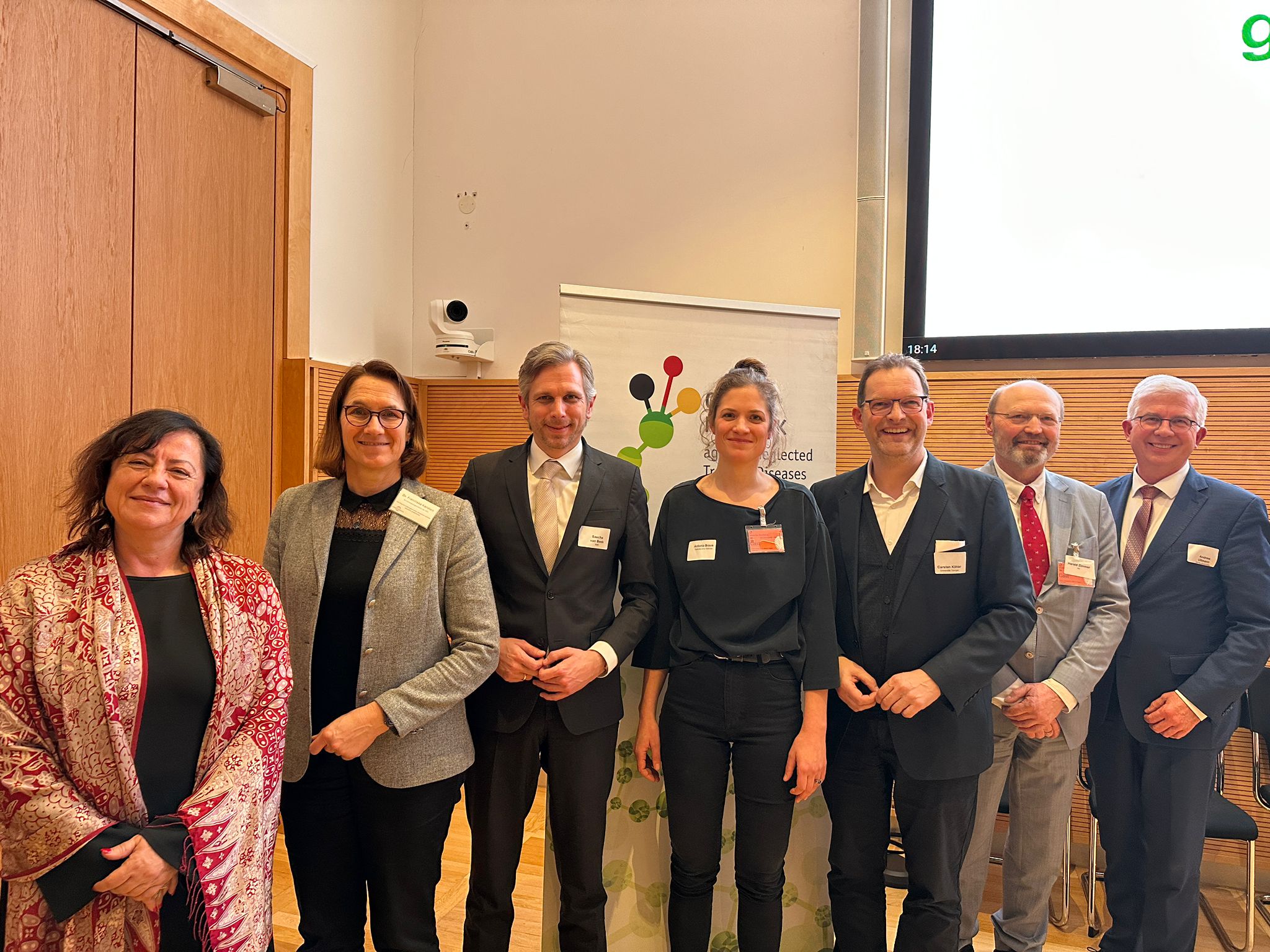
Berlin, 28 January 2026 – The Parliamentary Advisory Board on Neglected Tropical Diseases (PB-NTDs) has been reconstituted in the German Bundestag. In the presence of around 60 guests, the new spokesperson of the PB-NTDs, Sascha van Beek, MdB (CDU/CSU), shared that he first came into personal contact with a neglected tropical disease as a child through his community’s support for people affected by leprosy.
Beyond this personal experience, he emphasized that there are many compelling reasons to engage in the fight against neglected tropical diseases (NTDs): only healthy people can contribute effectively to their societies, and only with a healthy population can countries strengthen their economies. Van Beek also expressed his regret that there is no longer a Subcommittee on Global Health in the Bundestag, underlining the critical role of the PB-NTDs in filling this gap.
Other members include:
- Stephan Albani, MdB (CDU/CSU)
- Franziska Kersten, MdB (SPD)
- Dr. Hendrik Strick, MdB (CDU/CSU)
- Ruppert Stüwe, MdB (SPD)
Exhibition on Neglected Tropical Diseases in planning

Berlin, 13.06.2024 - Members of parliament and scientific staff of the Parliamentary Advisory Council on Neglected Tropical Diseases met in the Reichstag to discuss a joint photo exhibition planned for 2025. The concept envisages that, as a first step, the members of the network will select and describe photos from their projects and present them to the participating MPs for selection.It is also planned to make the exhibition available in the constituencies of the participating MPs.
New member of the Parliamentary Advisory Council
Berlin, 07.02.2024 - We are delighted to have Erwin Rüddel as a new member of the Parliamentary Advisory Council on Neglected Tropical Diseases to Strengthen Health Systems.
Members in the 20th legislative period
- Dr Georg Kippels (CDU/CSU), Chairman
- Heike Baehrens (SPD), Deputy Chairwoman
- Prof Dr Helge Braun, (CDU/CSU)
- Dr Karamba Diaby, (SPD)
- Knut Gerschau (FDP)
- Dr Christoph Hoffmann, (FDP)
- Volkmar Klein, (CDU/CSU)
- Erwin Rüddel (CDU/CSU)
- Rebecca Schamber (SPD)
- Kordula Schulz-Asche, (Alliance 90/The Greens)
- Ruppert Stüwe, (SPD)
- Dr Andrew Ullmann, (FDP)
Unite, Act, Eliminate - Successes in the fight against neglected tropical diseases in Rwanda
Fireside chat on World Day against Neglected Tropical Diseases 2024
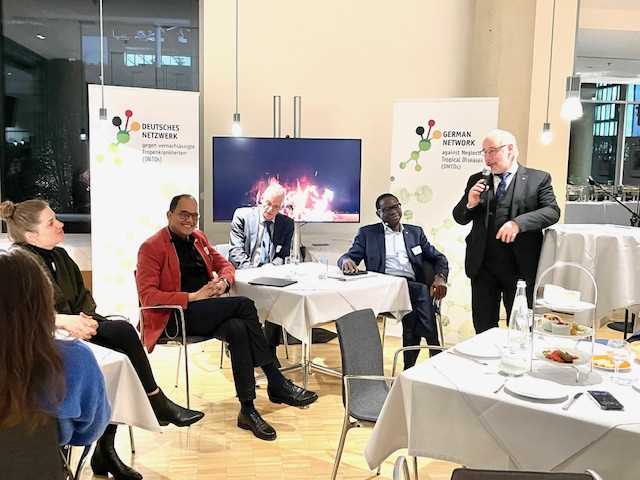
Berlin, 01.02.2024 - The Rwandan Ambassador H.E. Igor Cesar and Dr Karamba Diaby, Member of the German Bundestag and member of the Parliamentary Advisory Council on Neglected Tropical Diseases, were invited to the 2024 fireside chat at the German Bundestag. The discussion took place in front of around 60 guests, including other MPs, representatives from ministries and experts from the field of global health.
The Rwandan ambassador pointed out that after the 1994 genocide in his country, the people had returned to their senses and committed themselves to putting people, citizens and politics at the centre of their interests. This included recognising that people have a right to health. A health insurance system was introduced, from which 97 per cent of all Rwandans now benefit.
Dr Karamba Diaby emphasised that women make up 60 percent of the Rwandan parliament. This is important, he said, because women play the main role in the country's development and contribute significantly to progress. In this respect, the East African country is a role model for all countries in the world.
Other topics discussed included the recruitment and migration of skilled workers in science, the opportunities offered by digitalisation and telemedicine, which could enable the African continent to leapfrog development steps and contribute to further modernisation.
The event was moderated by Michael Herbst, Head of Political Work, Christoffel-Blindenmission Deutschland, Chairman, Association for Development Policy and Humanitarian Aid (VENRO). Antonia Braus, Member of the DNTD Board, One Health and Scientific Monitoring Officer, Veterinarians Without Borders (ToGeV) welcomed the guests and Dr Georg Kippels MdB, Spokesperson of the Parliamentary Advisory Council against NTDs, rounded off the evening with his closing remarks on this fireside evening.
Information event for scientific assistants of Members of the German Bundestag
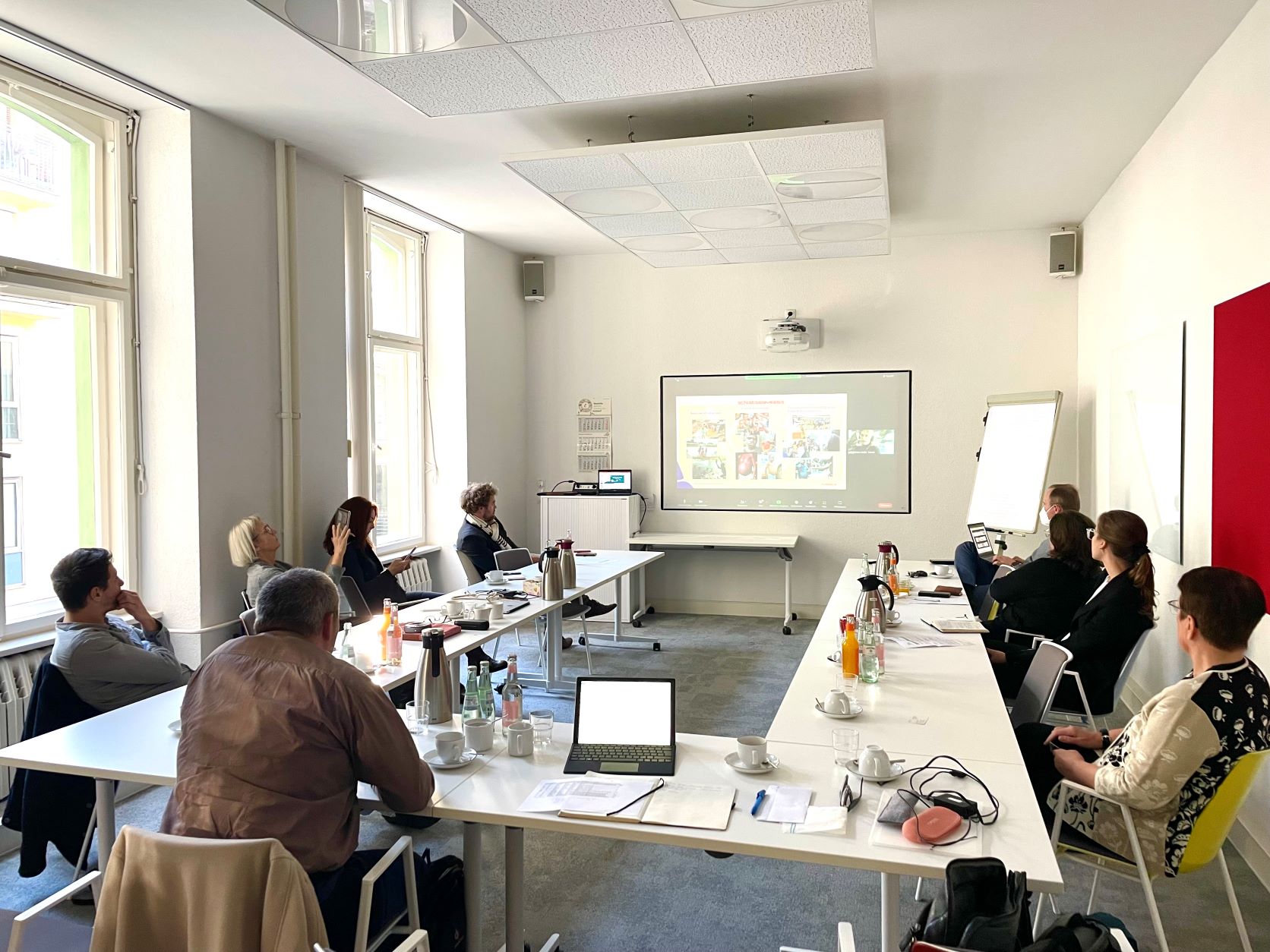
Berlin, 15.11. 2022 - In the new legislative period, scientific assistants of Members of the German Bundestag from the Parliamentary Advisory Council, the Committee on Economic Cooperation and Development, Health and Education and Research had the opportunity to learn about neglected tropical diseases and their importance in global health. Prof Dr Jürgen May, Director of the Bernhard Nocht Institute for Tropical Medicine (BNITM) in Hamburg, gave an overview of neglected tropical diseases. He described the connection between poor populations in Africa, Latin America and Asia and their health limitations and lost years of life (Dalys). He also pointed to international efforts to address neglected tropical diseases in the Sustainable Development Goals (SDG 3.3.), the WHO-NTD Roadmap and the Kigali Declaration on NTDs. Miriam Maier of Christoffel-Blindenmission e.V. spoke about the challenges in NTD control programmes of eye diseases such as trachoma and river blindness, Dr. Anil Fastenau of DAHW (Deutsche Lepra und Tuberkulosehilfe e.V. ), gave an insight into his work at DAHW, Dr. Igor Pilawski presented the project work of Veterinarians without Borders and Antonia Asche from Merck spoke about her company's commitment to control programmes against schistosomiasis. Important questions arose about the connection between antibiotic resistance and NTDs, as well as climate change and the possible disease burden of neglected tropical diseases. The event was hosted by Christian Griebenow, CEO of Veterinarians Without Borders and member of the DNTD board.
From Commitments to Action
+++ Lunch with the Parliamentary Advisory Council against Neglected Tropical Diseases
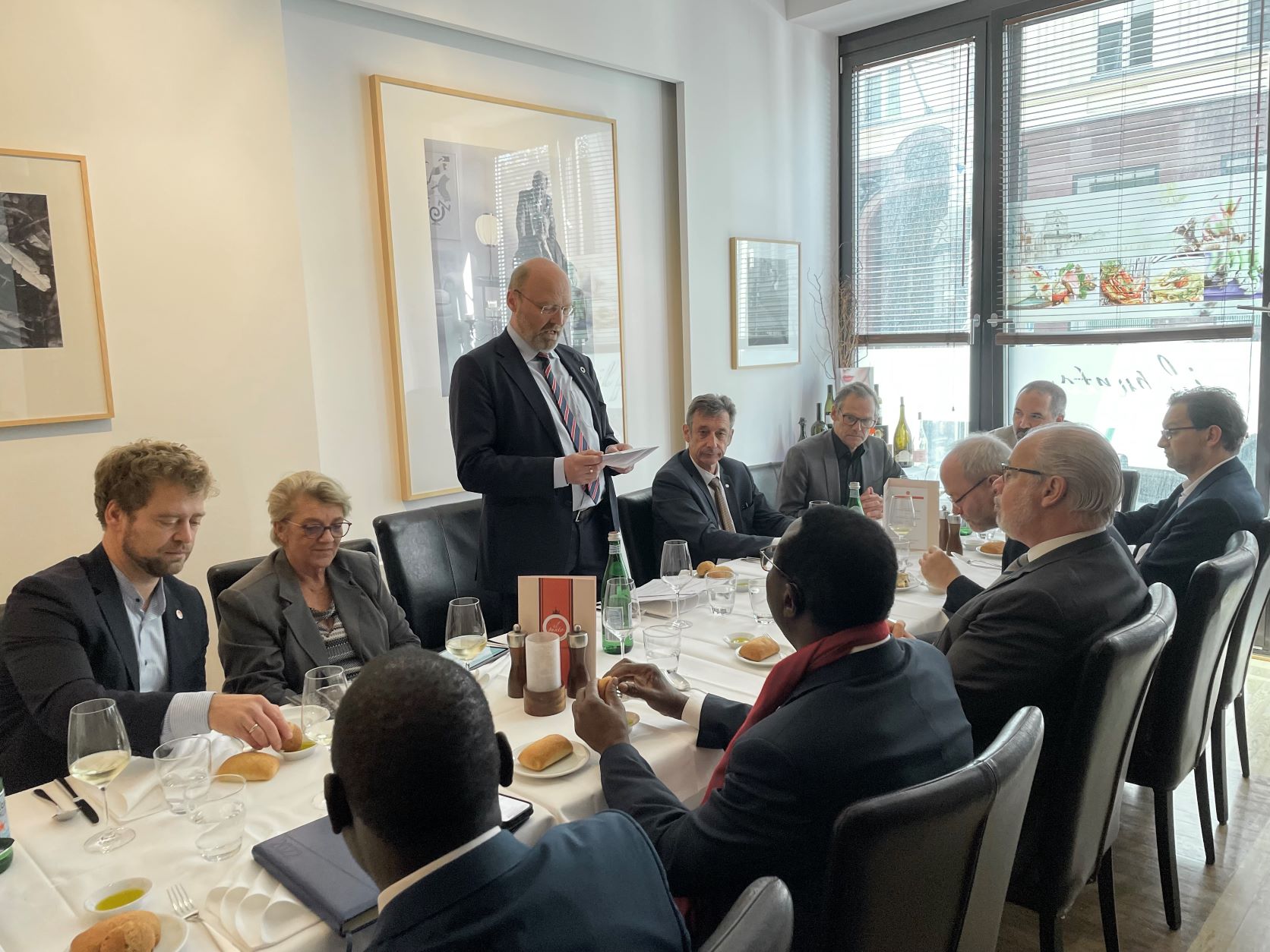
Berlin, 20.10.2022 - At a joint lunch of the German Network and the Parliamentary Advisory Council against Neglected Tropical Diseases, the MPs discussed, against the backdrop of austerity measures in the federal budget, how the many commitments of the federal government - coalition agreement, Kigali Declaration on NTDs, G7 final declarations - in which it has committed itself to stepping up the fight against NTDs, can be put into action. Increases in funding are not to be expected; everyone hopes that the funds and projects already committed will not be cut.
First meeting in the new legislative period
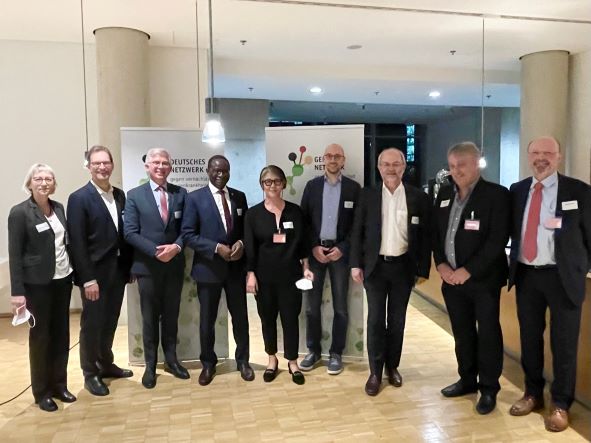
Berlin, 23.03.2022 - At the first meeting of the Parliamentary Advisory Council against Neglected Tropical Diseases and for Strengthening Health Systems in this legislative period, the German Network against Neglected Tropical Diseases welcomed the new members Ruppert Stüwe MdB and Rebecca Schamber MdB. Thematically, the focus was on product development partnerships (PDPs). Patron of the Parliamentary Evening was Dr Georg Kippels MdB, Speaker of the Parliamentary Advisory Council. Dr. Joachim Klein gave an overview of the research funding of the Federal Ministry of Education and Research (BMBF). Dr Sabine Specht, Head Filarial Program, Drugs for Neglected Disease initiative (DNDi) presented research approaches for neglected tropical diseases. Dr Jutta Reinhard Rupp, Head, Global Health Institute, Merck pleaded for the decoupling of donations in order to create incentives to develop and distribute innovative drugs.
Members in the 20th Legislative Period
Berlin, 26.02.2022 - Members of the Parliamentary Advisory Council against Neglected Tropical Diseases for Health Systems Strengthening are currently
- Dr. Georg Kippels, (CDU/CSU), Chairman
- Heike Baehrens (SPD), Deputy Chairwomen
- Prof. Dr. Helge Braun, (CDU/CSU)
- Dr. Karamba Diaby, (SPD)
- Knut Gerschau (FDP)
- Dr. Christoph Hoffmann, (FDP)
- Volkmar Klein, (CDU/CSU)
- Rebecca Schamber (SPD)
- Kordula Schulz-Asche, (Bündnis 90/Die Grünen)
- Ruppert Stüwe, (SPD)
- Dr. Andrew Ullmann, (FDP)